
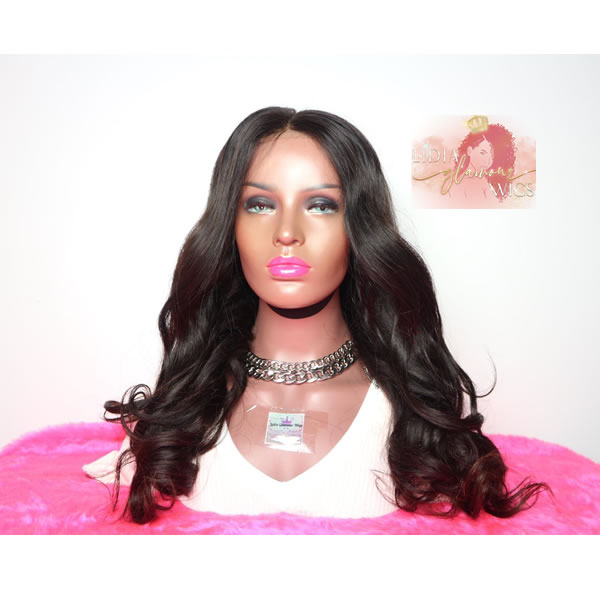
WHAT’S THE DIFFERENCE, AND HOW DO I CHOOSE?
Full-Lace Wigs and Front Lace Wigs:
*Here’s the breakdown*
FULL-LACE WIGS
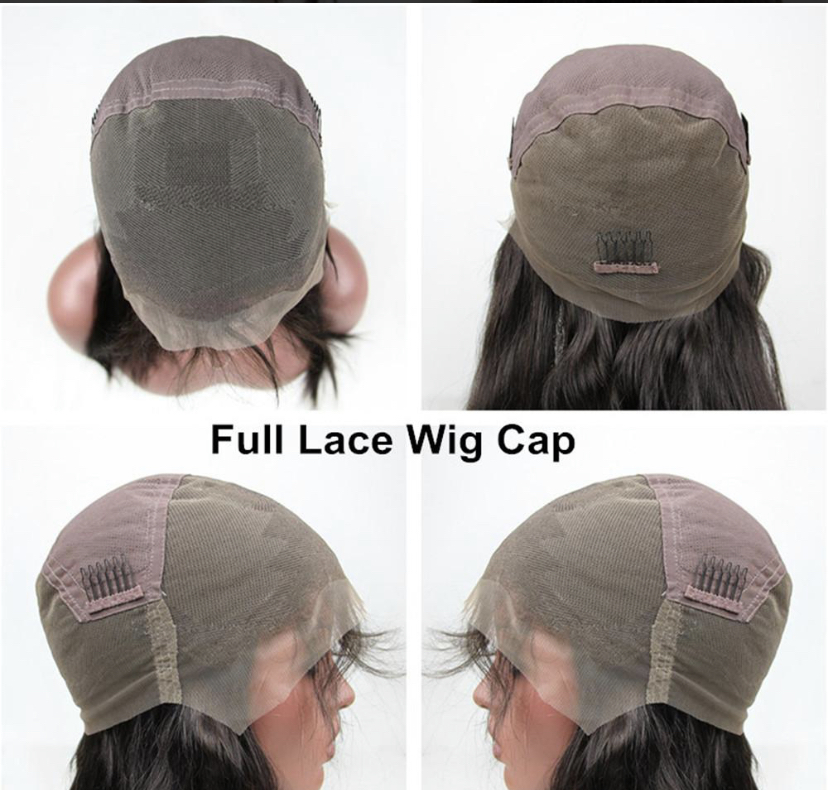
A full-lace wig uses lace throughout the entire base, and hair must be hand-sewn in because the lace is so delicate. Although this can make full-lace wigs somewhat more expensive, the payoff is flexibility – full-lace wigs can be styled any way you wish. The full-lace base ensures that wherever you part the hair, it will look natural.
Another benefit of full-lace wigs is their breathability lace is a durable but light material that allows for better airflow around the wearer’s scalp. They are also lighter than lace-front wigs, because a lace base cannot anchor the same volume of hair as bases made of thicker materials.
Finally, full-lace wigs are valued for their durability – the lace base can be bonded all over the wearer’s head, so full-lace wigs can be worn for workouts and even swimming.
FRONT-LACE WIGS:
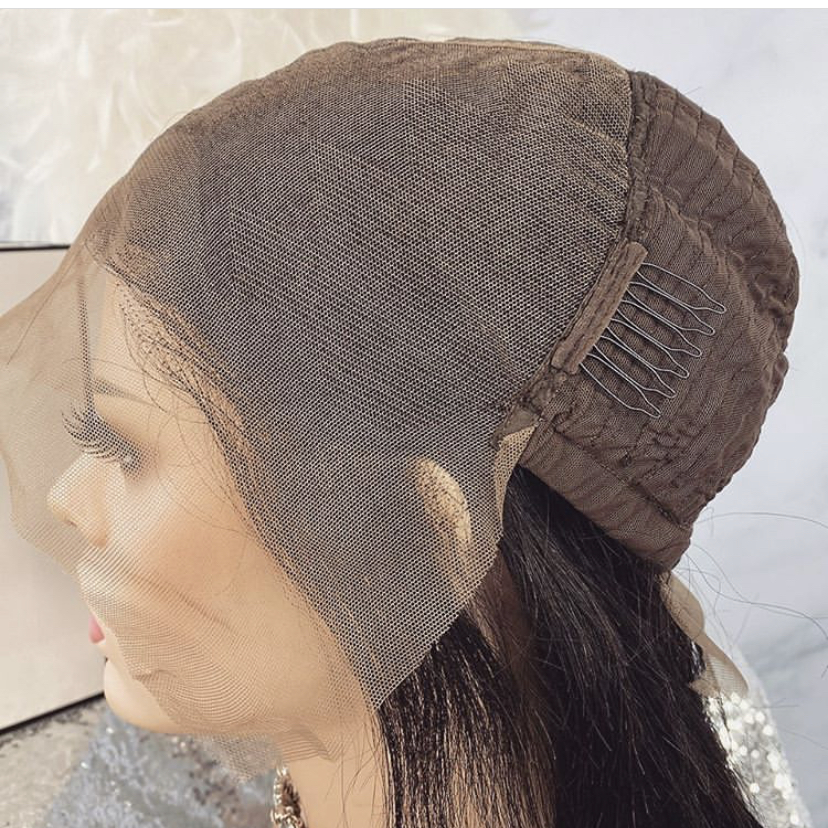
Lace-front wigs use lace at the front of the wig, usually extending to about three to four inches above the hairline, where a small seam connects it to a mesh base that anchors the hair in the rest of the wig. Front-lace wigs are more affordable than full-lace because hair can be machine-sewn into the mesh.
The lace-front allows for a natural hairline at the front, and hair can be parted above the forehead, but not throughout the rest of the wig. Lace-front wigs are slightly heavier, but also allow for thicker and more voluminous hair at the back.
Although slightly less durable, lace-front wigs are considered easier for first-time wig-user’s because they are bonded to the head in fewer places.
HOW SHOULD YOU CHOOSE?
Although we hate to admit it, we doesn’t have all the answers, and the choice between wigs depends on clients preference and affordability.
But the following questions should help you land on your answer:
- What kind of hairstyles do I prefer? Is parting the hair at the front enough, or do I need to be able to part it anywhere?
- How important is breathability to me? How light do I need it to be?
- Have I ever worn a wig before? Do I feel confident bonding it?
- How active am I? How durable does my wig need to be?
Remember: at the end of the day, you can’t go wrong with whatever you choose. At Lidia Glamour Wigs we ensure the quality of all our hair.
Don’t forget to tag @lidiaglamourwigs
WHAT ARE VIRGIN HAIR EXTENSIONS?
Virgin Hair is 100% Natural Human Hair that has never been manipulated or processed in any way.
However, in the world of human hair extensions, Virgin Hair is human hair that has been chemically altered or mechanically manipulated to achieve desired textures and/or colors and usually sourced from multiple donors.
This means that most ‘Virgin Hair’ sold today has actually adopted former ‘Remy Hair’ characteristics.
Remy Hair Extensions is typically the hair “left over” from 100% Virgin Hair donors and processed to market which lowers the quality. But now, we are seeing this trend into our virgin hair market, lowering industry standard on what used to be known as the Gold Standard.
RAW HAIR EXTENSIONS?
Raw Hair is 100% Natural Human Hair that is not chemically unprocessed in any way and usually sourced from single donors.
The term ‘Raw’ helps to differentiate between virgin hair and processed virgin hair. Which makes Raw Hair one of the Best Virgin Hair on the market.
DIFFERENCES BETWEEN RAW HAIR AND VIRGIN HAIR!
Raw hair texture is naturally derived whereas Virgin hair has been processed to achieve the texture pattern.
Virgin hair is typically silky, medium to high luster, and sourced from multiple donors. Whereas Raw hair varies in pattern, colour, and is typically lower to medium luster due to the fact that it is not processed and cut from same donors.
RAW HAIR Features:
- Purest form of Virgin Hair
- Rare to find.
- Every bundle has a unique appearance
- Full cuticle hair
- Mainly sourced from one donor.
- Available hair textures are (natural wave, curly, straight)
- Lasts longer
- High maintenance
VIRGIN HAIR FEATURES
- Quality varies depending on distributor
- Every bundle is uniform due to hair being processed
- Available in different textures
- Lasts up to one year with good care
- Cuticles may not always be in tact.
- Hair feels good at first and may feel hard after fews wash.
WHICH QUALITY IS BETTER?
The quality will depend on the donors, sourcing, and processing.
There can be lower quality raw hair just as there can be higher quality Virgin hair.
The difference between Raw hair and virgin hair mainly depends on how the hair is processed.
WHERE IS RAW HAIR AND VIRGIN HAIR SOURCED FROM?
Virgin and Raw Human Hair are typically sourced from South Asian countries and can be rare due to supply and demand.
These countries include Cambodia, Laos, Myanmar (Burma), and India.
HOW TO TAKE CARE YOUR EXTENSIONS
Tape-ins
Tape-ins are strands of hair extensions which come prepared with tape or glue that can be fixed to your own hair.
Usually a hairdresser does this for you, and will use a special tool to heat up the glue while taking care to align the extensions with your roots.
How do I care for them?
Tape-in extensions require special care, and stylists often recommend special hair products that are less likely to loosen the glue.
They can be styled however you like but require gentle handling around the roots.
Tape-ins usually last 3-6 weeks before they need to be removed and reapplied. As with all extensions, however, how long they last depends significantly on how well you cared for and how quickly your own hair grows.
Clip-in Extensions
Clip-in extensions are one of the easiest to apply and least damaging to the hair and scalp, but they are also the least permanent.
These extensions can come in many different widths, and are held together at the base with fabric or silicon that is attached to a clip.
These can be placed easily, without assistance.
How do I care for them?
Clip-ins require similar care like any other extensions.
The extensions should be washed, conditioned, air-dried and delicately combed.
Clip-ins usually last 3-6 months with regular wear, but with extra special care, can last as long as a year.
Wefts
A weft, or weave, is a sewn-in hair extension, may be sewn by hand or machine, hand-sewn wefts are generally lighter but more delicate than machine-sewn wefts.
Typically, a stylist will first braid natural hair into cornrows, then stitch the weft into the cornrow using a needle and thread.
This process can take several hours, and the strain on the scalp can be uncomfortable – typically, wefts are not recommended for people with thin or light hair.
How do I care for them?
Because of the strain on your scalp, weekly deep moisturisation of the scalp and edges of the hair is important. Stylists may also recommend the use of a special protein wash to decrease the damage done to natural hair. Beyond these considerations, however, wefts may be styled just like others
Wigs
Wigs can be constructed in many different ways, each resulting in a different feel, look, and price.
Wigs are generally used to cover the entire head, though partial wigs, like frontals, may be used to supplement, rather than cover, natural hair.
How do I care for them?
Wigs vary greatly in both their construction and the kind of hair used. In general, wigs are considered somewhat difficult to wash, and do require great care. *Please email us if you require this service price starts at £70*.
At Lidia Glamour Wigs we offer a revamp and maintenance services, where we look after your wigs/extensions to allow longevity.
Lace color
Swiss lace is available in two shades, transparent and medium brown. Transparent is more versatile of the two.
HD lace is very thin and can match no matter the skin tone.
Whether you choose Medium Brown Lace, Transparent Lace, or our HD Lace is truly up to personal preference.
UNDERSTANDING YOUR WIGS
Adjustable Strap
You often can find it sewed in the nape of your wig cap, it is designed to adjust the size of your wig with the use of hooks or velcro.
Baby Hair
Baby hair is small trimmed hair around the wig that make your hairstyle look more natural.
Balayage Hair Color
Balayage is a hair technique mostly used to achieve Ombre style.
Bald Cap Method Wig Application
Bald cap wig application method is to glue down a wig cap to cover your natural hair and conceal the trim by applying some foundation to make your head looks like it’s bald before putting on your wig.
Bleached Knots
It is the method to hide visible hair knots on your wig. Bleached knots make the hair appear like it is growing from the scalp.
Blonde hair is the most yellowish shade of hair mostly found in Northern Europe. The color shade can vary from pale blond to reddish blond to some golden-brown as well. This shade can also be achieved through bleaching the entire hair base.
Cap Construction is the wig-base or let’s say the way your wig cap is constructed. Cap construction can be full lace, lace front, 360 lace or u-part in your wig
Each construction is distinctive and uses a specific method of attaching hair to the cap.
Capsize
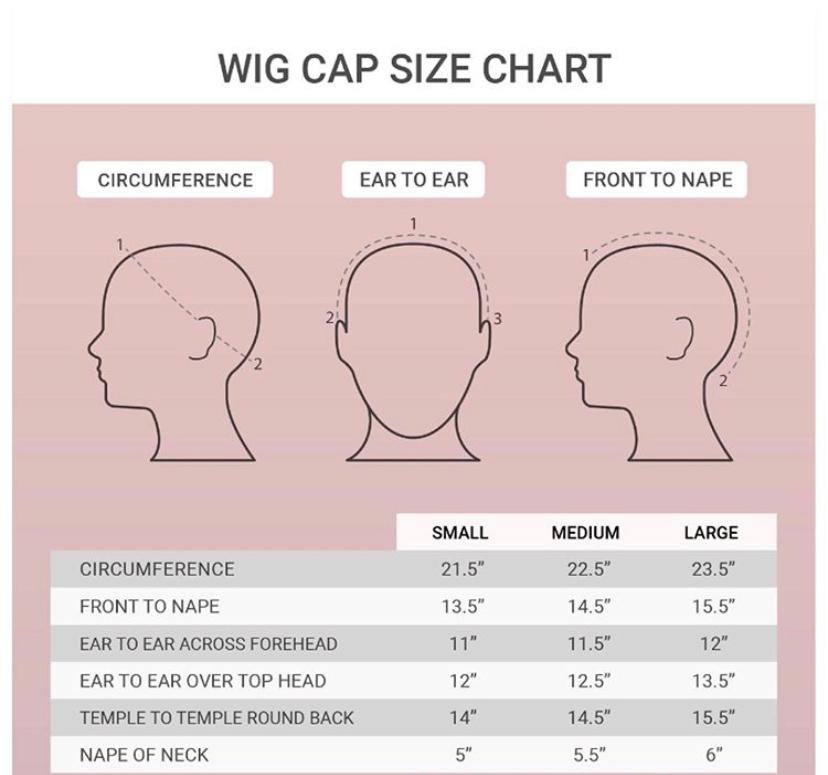
cap size is the measurement of your wig cap. Most lace wig measurements are made in inches through a cloth measurement tape. Usually, wig caps have adjustable straps as well to stretch or loosen it up to a half-inch.
Edges Protection
The regular use of wigs can cause friction on the edges of your hair. Friction dries out the hair and that leads to damage. It is advised to pay extra attention to your edges when prepping your hair to ensure the best protection for your hairline during your wig wear.
Elastic Band
An elastic band is a black flexible 1″-2″ wide band normally in black color, used to sew inside the wig cap from ear to ear to help secure the wig.
Fake Scalp Lace Wigs
Fake scalp lace wigs are pre-made, pre-bleached and pre-plucked wigs that are ‘do-nothing’ wigs. These wigs are inspired by a bald scalp wig wearing method and are very easy and comfortable to use, and it’s unnecessarily to wear an extra wig cap between your natural hair and wig.
Full Lace Wigs
Unlike lace front wigs, full lace wigs, have a fully covered 360 degrees lace-base from the hairline to the nape of the neck which covers the whole head. It is a very versatile wig that can be worn in multiple styles.
All full lace wigs are hand-tied as well and parting hair and making high ponytails without any issue.
Glueless Lace Wigs
Glueless lace wigs are non-adhesive which means they can be worn without any glue. These types of lace wigs come with glueless cap construction, some are lace front and some are full-lace. These wigs have adjustable straps and combs to fix them on the scalp.
Got2b
Got2b glue is a very famous “water-resistant” hairstyling/spiking gel or glue from the brand called Schwarzkopf. The Got2b glued gel is the hottest trend of securing wig and frontal units in the hair industry.
This glue can be used to ensure a perfect hold for your lace wigs, frontal units, and 360 frontal units.
Hair Knots
To help hair strands stay firm on the lace, hair knots are used. While making lace wigs, the hair is knotted strand by strand with a tiny needle on lace. The knots are mostly visible and looks like tiny seeds and can be single or double. Single knots are less visible, whereas double knots give more strength but are fairly visible.
Hair Weaving
Hair weaving is a hair extension method to style your hair. In this method, hair wefts are sewn directly onto flat cornrows. There are many kinds of weaves including sewing, strand by strand, interlocking, fusion, and bonding.
Hand Tied Wigs
Hand-tied wigs are the most labor-intensive wigs because each and every hair is individually hand-knotted into a cap. This makes hand-tied wigs look almost original because hair can be moved freely with multi-directional styling options.
HD Lace
A real HD lace is the thin and soft Swiss lace, it is a transparent, natural-looking and see-through lace that matches the complexion you have because it sits on your scalp like an adhesive invisible shield.
Highlight Hair Color
Highlight hair color is also called low-lighting in which the stylist change the original color by taking strands and making them lighter than your hair. In wigs, we normally hand-tie a few strands of light hair evenly or as customers’ requests into the lace.
Lace Closure
A lace closure is 4″x4″ or a little larger piece lace wig which covers temple to temple and put in the middle of the head. Lace closures can also be shifted slightly to the side to achieve a side-part look. Closures also cover smaller areas, where your hair parting is thin or limited.
Lace Colors
Laces come into multiple shades including transparent, light brown, medium brown and dark brown, to meet the needs of different skin shades.
Lace Front Wigs
Lace Front wigs, have a lace mesh at the front of the wig cap to give it a more natural and realistic look. These types of wigs can be worn in multiple styles including hair away from the face because if applied properly, the hairline is almost invisible and the scalp can be seen through the mesh.
Lace Frontal
A lace frontal is an ear-to-ear half wig that is mostly sewn with a few bundles of hair. The standard size of Lace Frontal is 13”x4” or 13”x6” Lace Frontal.
Melt Down, Melt Lace
Meltdown or Melt lace is a method to wear or install a wig on your head, usually by glue. By using this method on your lace wig or lace frontal, you achieve the natural ‘meltdown’ look on your scalp.
Plucking
Plucking is the technique to conceal the hair knots and have an invisible lace wig for a more natural look by thinning the hair along the hairline. Plucking should not be done with a heavy hand as it can disfigure the hair strands easily.
Silk Top
Silk top wigs, also known as silk base create a perfect illusion of your hair growing out of your scalp. Silk top wigs add an extra layer to the lace to hide the hair knots. It is another way to make a wig look more natural. These wigs are hand-tied and the hair is injected through the silk material to make knots look more like natural hair growth.
Swiss Lace
Swiss lace is a thinner, delicate and completely see-through lace.
Transparent Lace
Transparent lace is the lightest color lace that sits on the hairline of your wig which helps to give a very natural. They come in all types including frontals and closures as well. It comes in a normal lace material, Swiss lace material or HD lace material.
Virgin Human Hair
Virgin human hair is human hair that is chemically unprocessed and is free of dyes, perms, bleaches or harsh washes. The virgin human hair is always collected by a single hair donor.
Wig Application, Wig Install
Wig application or wig install is the method to securely fit a wig on your scalp. The techniques varies depending on your hairstylist or on the type of the wig. Your hairstylist can use glue, grip band, clips, glued hair spray or an elastic band to secure your wig.
Wig Glues
Wig glue is an adhesive used to install a wig on your scalp. Wig glues come in many types including sprays, water-based glue, and cream-based glues.
Wig Removal
The process of uninstalling wigs from your scalp is called wig removal. There are many wig removal solvents available on the market that are specially made to remove lace wigs. These solvents can soften adhesives helping the process to remove the wigs easily.
360 Lace Wigs
Have the lace wrapped around the entire perimeter of the wig. Because the back will look like your scalp, you can put your wig into a high ponytail or any other up-do style.